Automating the first and last mile of every bag's journey.
From aircraft to baggage hall and back, the NAS Baggage Automation System replaces manual cart-loading and lifting with a consolidated, batch-based flow — built to fit inside existing terminal footprints.
One system, four stations, no manual lifting.
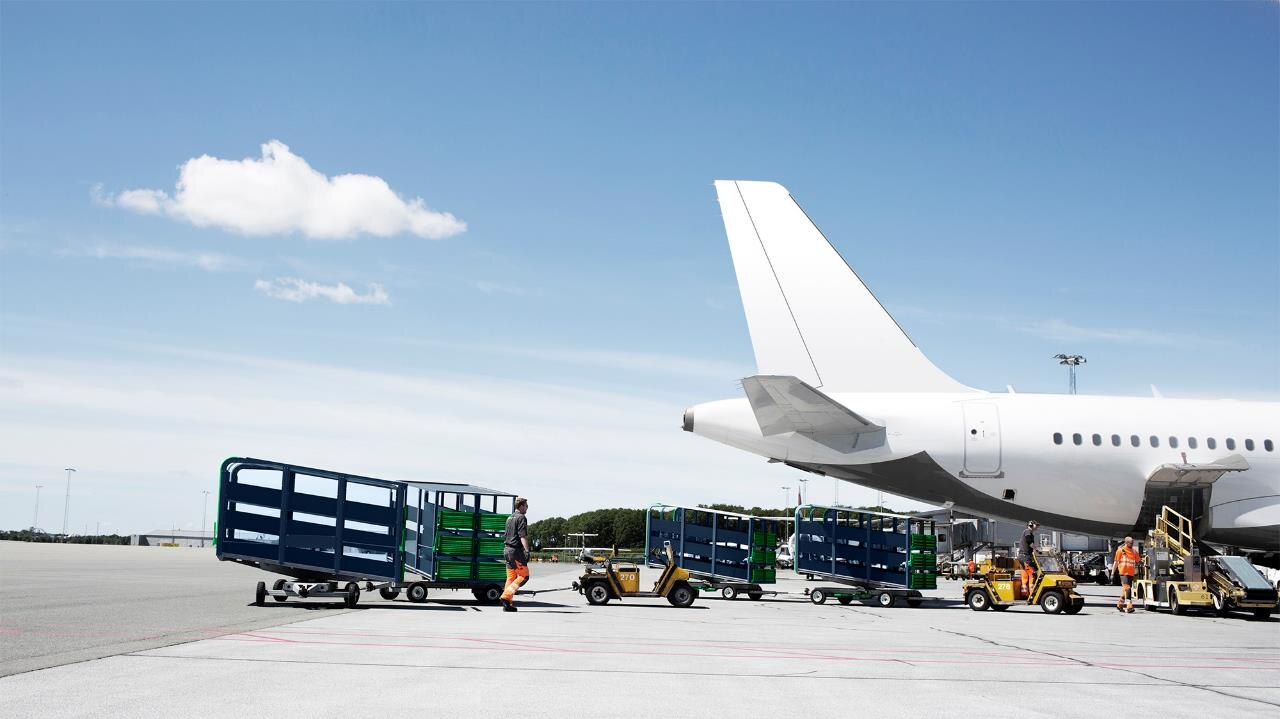
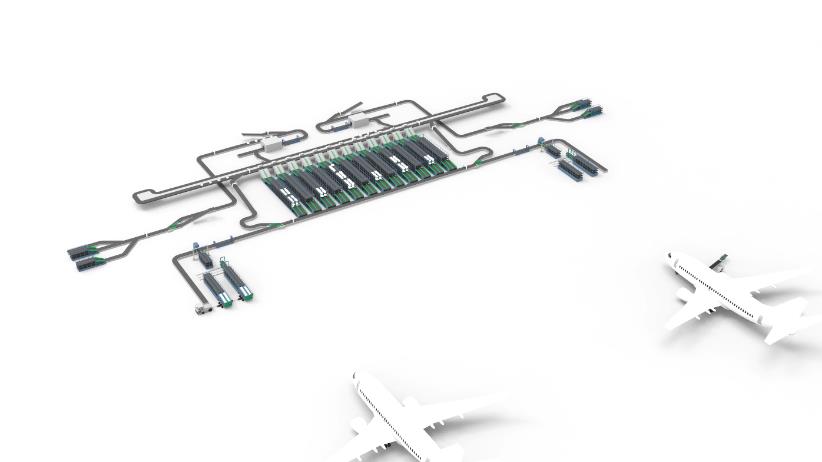
The system automates the movement of baggage between the aircraft and the baggage hall. Capacity Boosters aggregate bags for the Departure Station, where fully mechanised carts collect them without a single manual lift. A belt loader with an attached belt connector loads and unloads bags at the aircraft, and the Arrival Station merges returning bags back onto the existing arrival carousel.
"The batch approach removes manual lifting from the loop — and removes most of the baggage carts an airport used to need."
Four building blocks, working as one system.
Each station is an independent module in its own right — combined, they automate the full baggage journey between aircraft and baggage hall.
Aircraft service
A belt loader with belt connector loads and unloads bags directly at the aircraft.
Departure station
Capacity Boosters aggregate bags; mechanised carts collect them automatically — no manual lifting.
Sorter
Bags are routed through the sorter to the correct flight and destination flow.
Arrival station
Returning bags are collected from carts and merged onto the existing arrival carousel.
Designed to slot into the buildings airports already have.
Every station is modular, so the system can be phased into an existing baggage hall rather than requiring a ground-up rebuild.
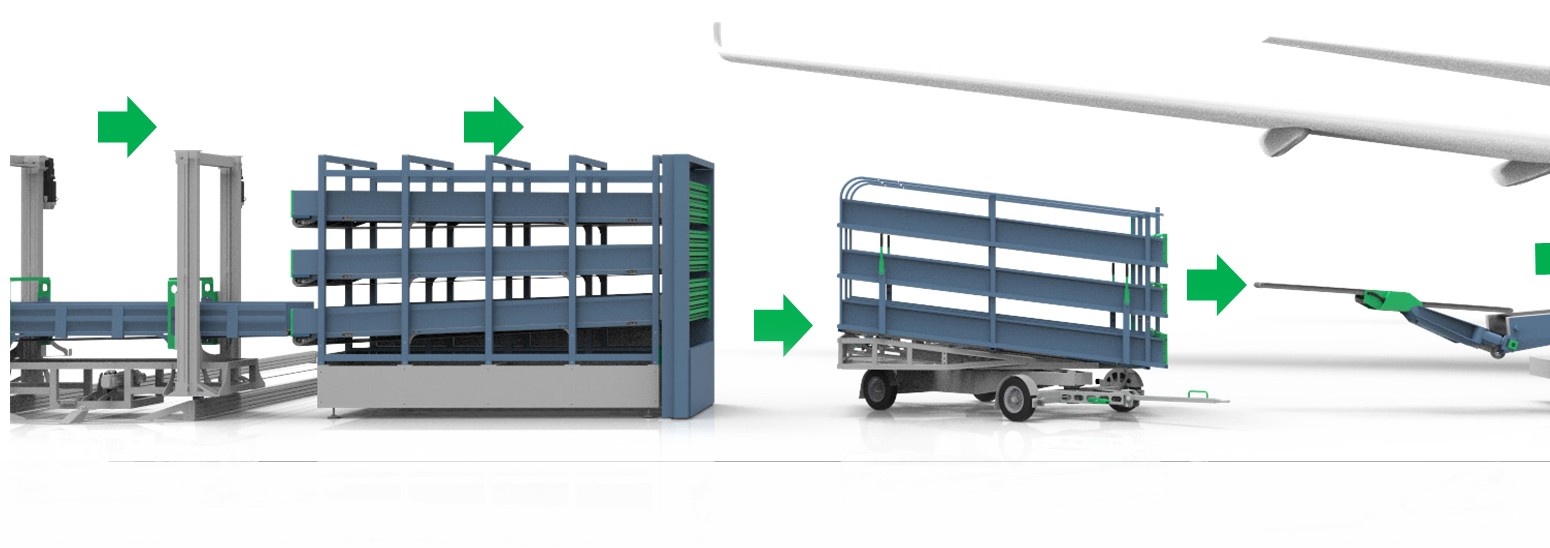
- Capacity Booster Storage — aggregates bags ahead of departure consolidation.
- Departure & Arrival Consolidation Units — merge bag flow to and from the cart network.
- Cart — the fully mechanised unit that carries bags from consolidation through to the aircraft.
- Belt Connector — attaches to the belt loader for automatic pick-up and hand-off at the aircraft.
What changes on the ground.
Every figure below is a design outcome of the batch-and-flush approach, not a marketing round-up.
No manual lifting
Bags are flushed automatically to and from trolleys and belts, eliminating manual lifts from the process.
Time savings
Flushing to and from consolidation units cuts the time between bag drop-off and delivery.
Cart fleet reduction
Consolidated batching reduces the number of baggage carts an airport needs to keep in service.
Less hall space
The batch approach reduces the floor-space requirement inside the baggage hall.
Fewer work injuries
Removing manual lifts from the workflow reduces the injuries associated with baggage handling.
Full traceability
Batching bags through defined stations means each bag can be traced from drop-off to delivery.
Gentle handling
The system removes abrasive manual lifts and loading, reducing wear and damage to luggage.
Cost-efficient payback
A cost-efficient installation designed around a fast payback period for the operator.
A growing baggage handling market.
Independent market research puts the global baggage handling systems market at roughly USD 10.3bn in 2025, growing to around USD 12.9bn by 2030 at a CAGR near 6.6% — with barcode tracking remaining the dominant technology and Asia-Pacific the fastest-growing region.
Where NAS fits
Most of that market growth is expected to come from conventional systems. NAS is one of the newer entrants bringing a batch-automation approach with no directly comparable competitor at the same fit-to-demand price point.
Curious how it fits your terminal?
Share your baggage hall layout and passenger volumes — we'll scope what's possible.